HEINEKEN · 2025–Present
Making the best market everyone’s standard
Part of Heineken’s broader push to digitalise the sales-rep role — starting with promotions.
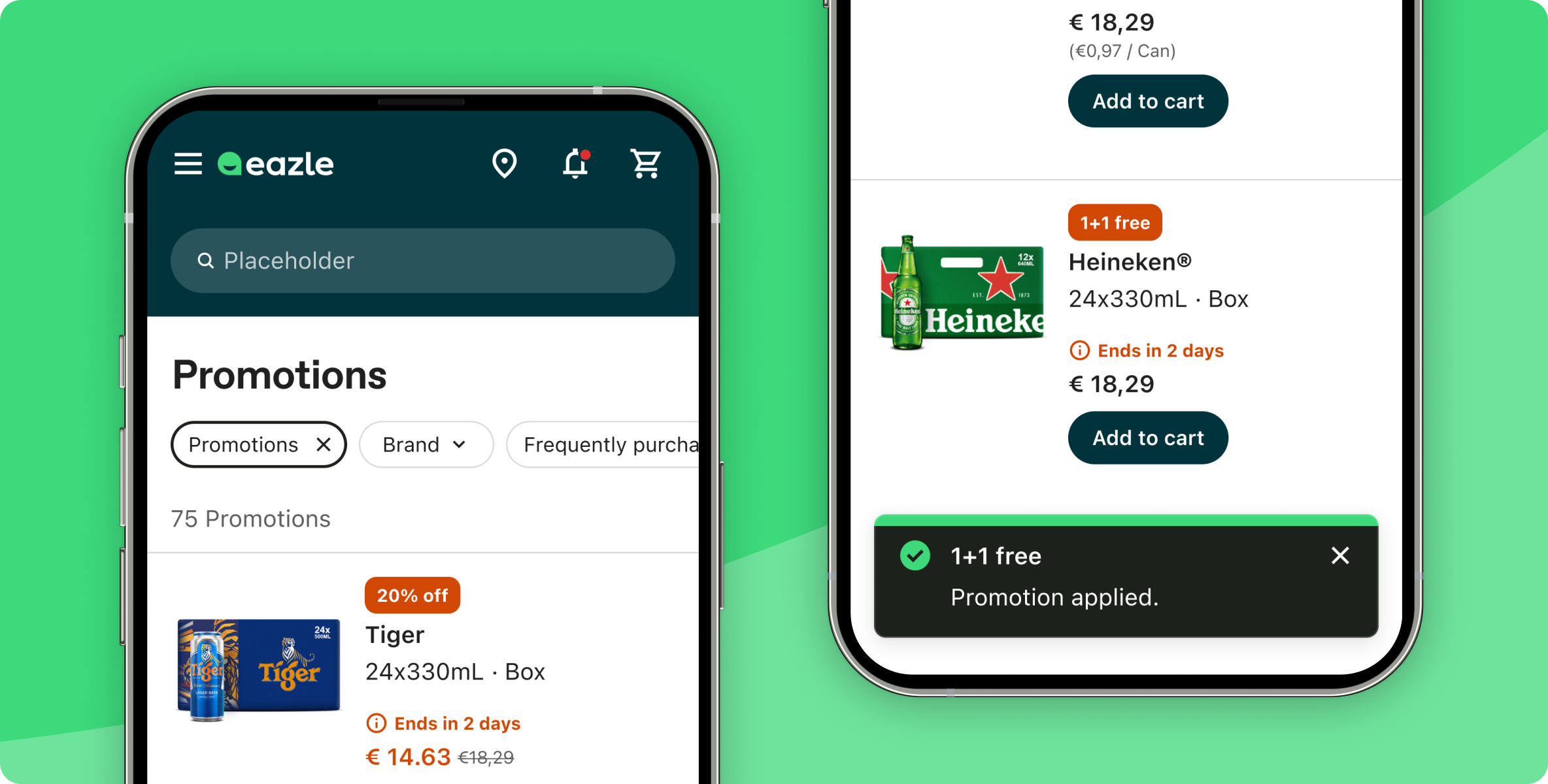
Impact
As Heineken standardised promotions across 20+ markets, each one carried its offline habits straight into the platform — treating digital promotions like the in-person deals and negotiations they'd always run. That's what caused the problem.
Offline thinking in a digital world
Each market ran its own offline promotion mechanics — recreated digitally, they were hard for customers to understand and hard for the business to scale.
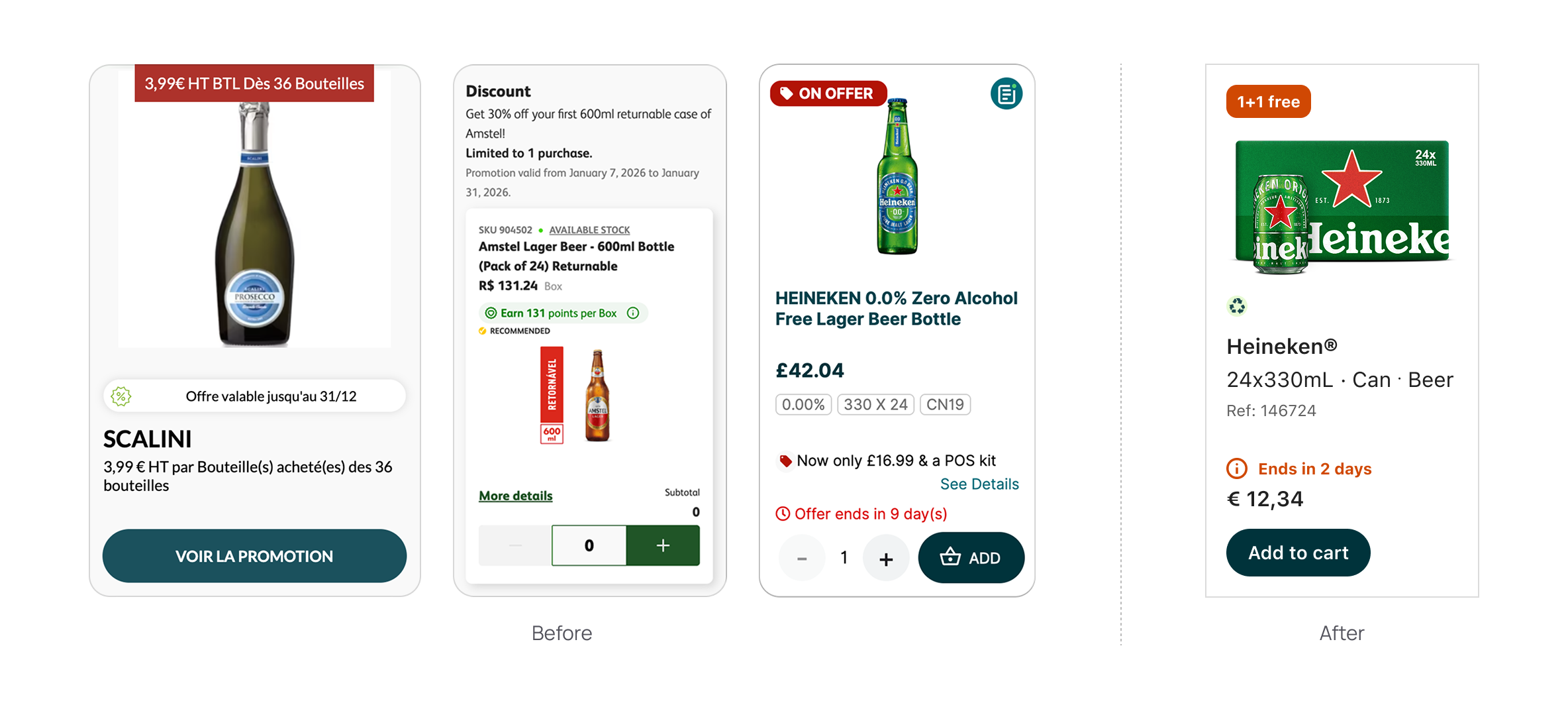
When offline behaviours go digital
My role: Lead researcher — interviewing key markets and mapping the customer journey.
I interviewed teams across key markets. The same problems recurred: complex mechanics, inconsistent experiences, and customers unsure whether they'd redeemed a promotion.
Customer journey
Getting everyone behind one approach
My role: Led strategy workshops with markets and leadership to define a shared approach.
The challenge wasn't the design — it was changing established ways of working. Getting markets and leadership behind a shared set of strategic pillars aligned everyone, and those pillars became the foundation for every design and product decision that followed.
Strategic pillars
“Tom’s strategic thinking was a real asset to the project. He has a natural ability to quickly understand complex problems and translate them into a clear direction that moves things forward.” — Senior Stakeholder, Heineken.
Applying a systems lens
My role: Created the promotions system model that shaped the design framework.
Before designing the experience, I mapped promotions as a connected system, bringing together business inputs, mechanics, rules and customer journeys into a single model. This became the foundation for the product architecture and design approach.
Promotions system model
Defining the system architecture
My role: Led architecture workshops with product, engineering and architects.
I brought engineering, product and architecture together around one approach — balancing business, technical and customer needs. Separating the promotions engine from the core platform kept it technically achievable while still feeling like one seamless experience.
System architecture
Product and promotion engines, integrated into one journey.
From market-led to platform-driven promotions
My role: Lead designer — translating strategy and architecture into a consistent product experience.
Every market developed promotions differently. I brought those needs into one scalable experience — consistent for customers, workable for the business across markets.
Product listing (PLP)
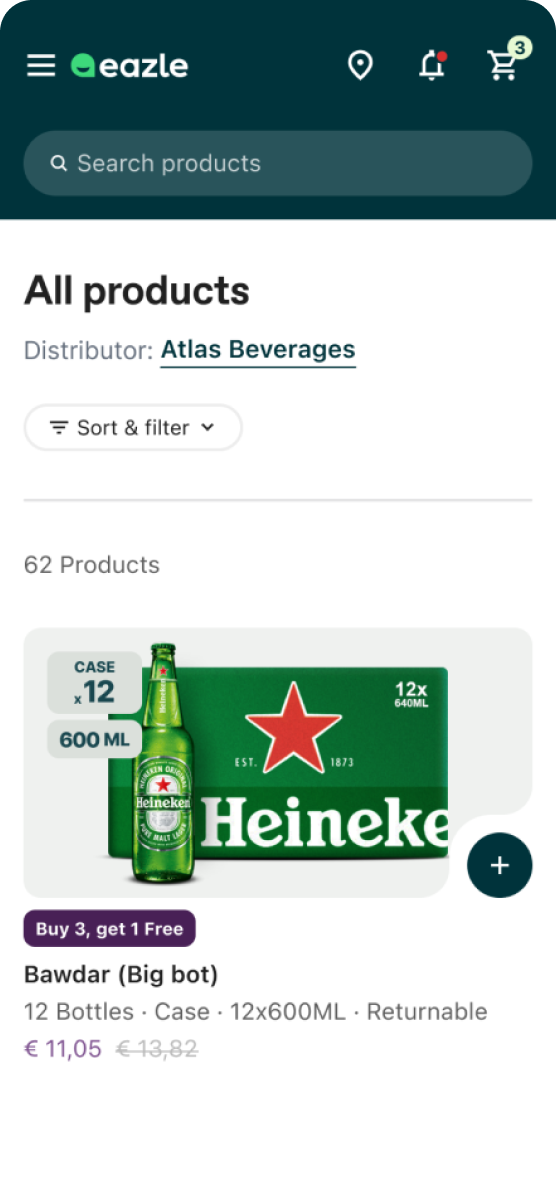
No clear promotion visibility — customers unsure about eligibility and redemption.
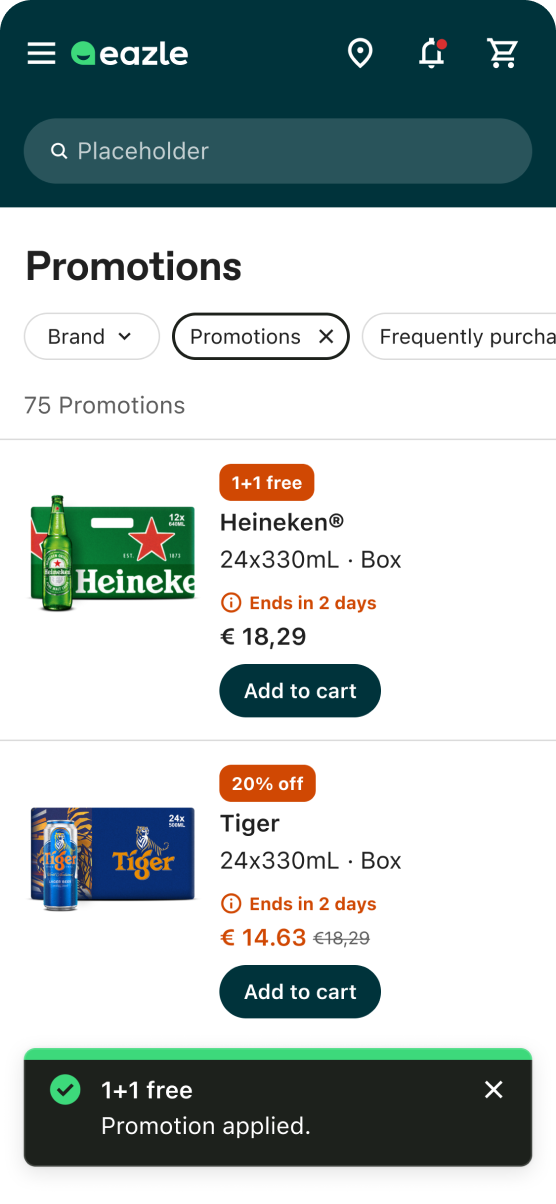
Promotions clearly surfaced, easy to filter, and simple to act on.
Cart
In the cart, the focus shifts to completion. Promotions are clearly grouped, easy to apply, and customers are nudged when there’s value they haven’t picked up yet.
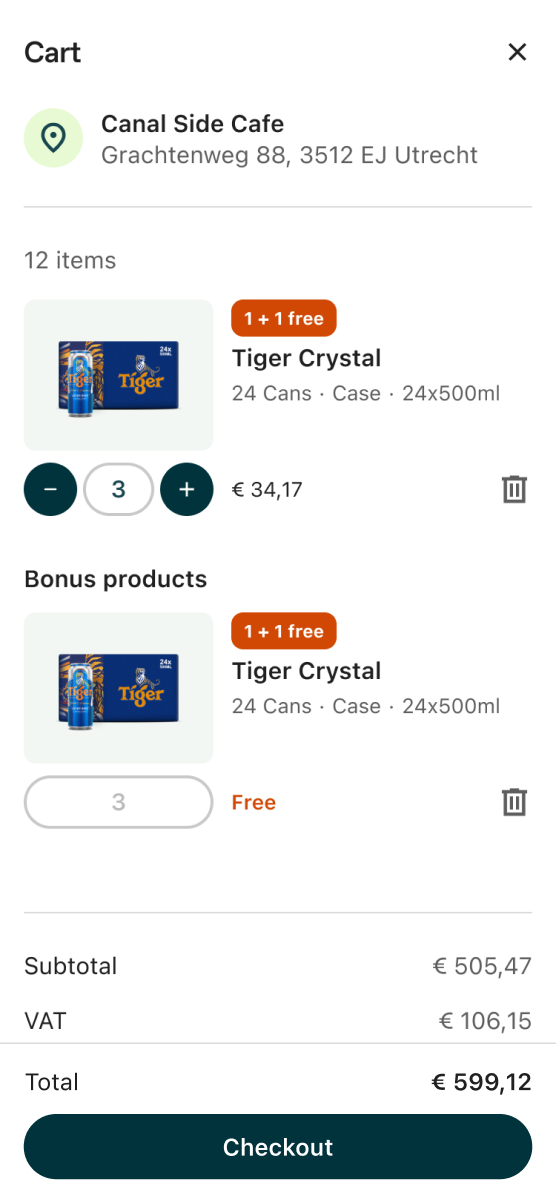
Promotions were easy to miss — bonus items and rewards hidden from the main flow.
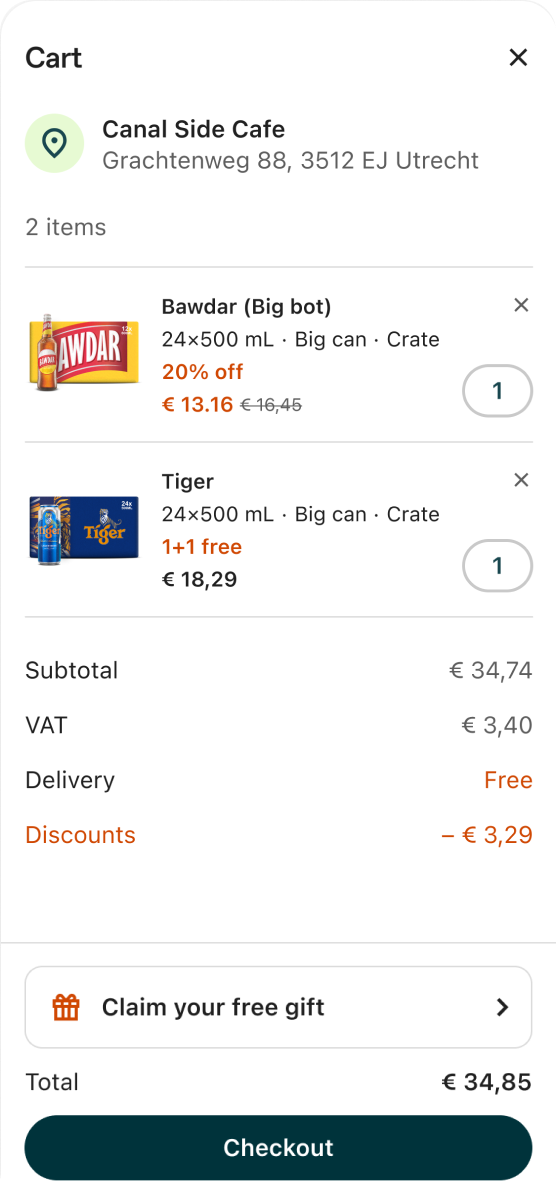
Promotions grouped and actionable, with real-time feedback so customers don’t miss available value.
Measuring and evolving the system
My role: Defined the measurement framework and oversaw rollout with third-party testing.
The rollout is iterative: launch in one market, measure, learn, refine, then scale. Early results are shaping a proven model markets can adopt consistently.
Measurement framework
What this means for you
If your product is fragmented across markets or teams, I bring the same approach here — find the version that’s already working somewhere, then build the systems view and stakeholder alignment to scale it. The goal isn’t consistency for its own sake; it’s making the best version everyone’s standard.